
Water needs more than a name change
- Andrea Compton

- Aug 9, 2025
- 4 min read
Scoop Article: Andrea Compton. 5 August 2025
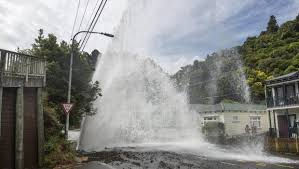
Wellingtonians are united by a simple truth: our water infrastructure is broken. Whether it’s water haemorrhaging under our roads, sewage spilling into our harbours, or households being told to boil water they should be able to trust — we all agree: the status quo has failed.
And now, a solution is being proposed.
The five councils of metropolitan Wellington — Hutt City, Porirua, Upper Hutt, Wellington City, and Greater Wellington Regional Council — have signed off on a new Water Services Delivery Plan (WSDP). This plan would replace the much-criticised Wellington Water with a new entity called “Metro Water,” to take over operations from July next year.
At first glance, it sounds promising. Metro Water will be council-owned, regionally managed, and guided by Te Mana o te Wai. It comes with a bold $25 billion investment forecast over 30 years and a clear mandate to fix what’s broken.
But scratch beneath the surface, and read the officers’ recommendations, and a different story emerges — one that should give ratepayers serious pause.
One Vote, Half the Assets
The Wellington City Council owns around 50% of the region’s water infrastructure. It has the largest population, the greatest development pressure, and the most urgent renewal needs. And yet, under the proposed governance model, it gets just one vote — the same as every other council, and fewer than mana whenua collectively.
In short: Wellington ratepayers are being asked to contribute half the cost, but get only one-seventh of the say.
This isn’t about rejecting partnership with our neighbours or with mana whenua — both are crucial. But representation must reflect investment, responsibility, and risk. If Wellingtonians are being asked to fund the lion’s share of this transformation, we must also have a fair say in how that transformation is delivered.
Same Structure, Different Logo
The model being proposed is eerily familiar. Like Wellington Water, Metro Water will be governed by a Board appointed by a Partners’ Committee, comprising the five councils and two mana whenua representatives. The same multi-layered, diffused structure that allowed Wellington Water to become a symbol of dysfunction.
Let’s not forget what that looked like:
Slow and fragmented decision-making• Accountability blurred between the Board, the councils, and contractors• Poor transparency and public communication• Spiralling costs with little improvement on the ground
If Metro Water is governed in the same way — by consensus bodies and indirect oversight — how can we expect better outcomes?
Public Confidence Is Already Drained
In the public consultation, people across the region were clear: they are deeply sceptical. They support change, but want a model that actually works. One that’s transparent, locally responsive, and protects public ownership.
Yet this plan moves decision-making further away from communities and into the hands of a corporate-style Board with limited democratic oversight. And while the plan assures us that public ownership will be protected, the risk of future privatisation — especially under economic pressure — remains a very real concern for many.
Price without power
Under Metro Water, residents will eventually pay water charges directly, instead of through their council rates. These charges are expected to rise from $2,100 per household to up to $5,700 by 2034.
For many households, that’s unaffordable — especially when trust in the delivery model is already so low. Without safeguards for low-income users, stronger public transparency, and clear links between pricing and service delivery, these increases will land hard and unfairly.
Meanwhile, Metro Water’s “harmonised pricing” model may see areas with high investment needs — like Wellington — effectively subsidising those that have under-invested. That’s not equity. That’s redistribution without accountability.
What Needs to Change
Wellingtonians deserve more than a name change. We deserve a water entity that works for the communities who fund it, rely on it, and suffer when it fails.
My personal view is that the Wellington City Council should have gone alone, to maximise efficiencies with other council assets , and ensure the elected officials are held accountable for decisions made with respect to water.
If we insist on joining a regional model, that means:
Proportional governance: Voting and decision rights should reflect investment and risk.• Modern infrastructure systems: Metro Water must invest in a standalone, internally owned asset management system, not rely on subcontractors, capable of managing all regional infrastructure assets at scale.• Programme Asset Management – Ensure all below and above ground infrastructure is coordinated with Metro water, such as power, gas, fibre, roading and lighting. This will ensure asset management on behalf of ratepayers is done efficiently and effectively and will drive down costs.• Public transparency: Real-time performance dashboards, public reporting, and community engagement — not just PR.• Accountability mechanisms: Clearly defined responsibilities for performance, cost overruns, and service failures.• Affordability protections: Targeted support for vulnerable households and transparency in how charges are set.• Review clauses: A formal review of the Metro Water structure after three years, with options to restructure if outcomes aren’t met.
We Can’t Afford to Get This Wrong
This is a once-in-a-generation opportunity to get water right. It’s not just about pipes and pumps — it’s about health, equity, climate resilience, and our region’s future growth.
But if we get the governance wrong, we will be repeating the same mistakes that got us here in the first place.
We all want to turn the tap and trust what comes out. To do that, we need a water system that’s as transparent as it is functional — one that puts people, not bureaucracy, first.
Metro Water must be better than Wellington Water, not just look better on paper.
Let’s not settle for “same same, no different.”
Andrea Compton is an independent candidate for the Northern Ward in the 2025 Wellington City Council elections. She is a Chartered Accountant with a strong background in infrastructure and finance.


Comments